
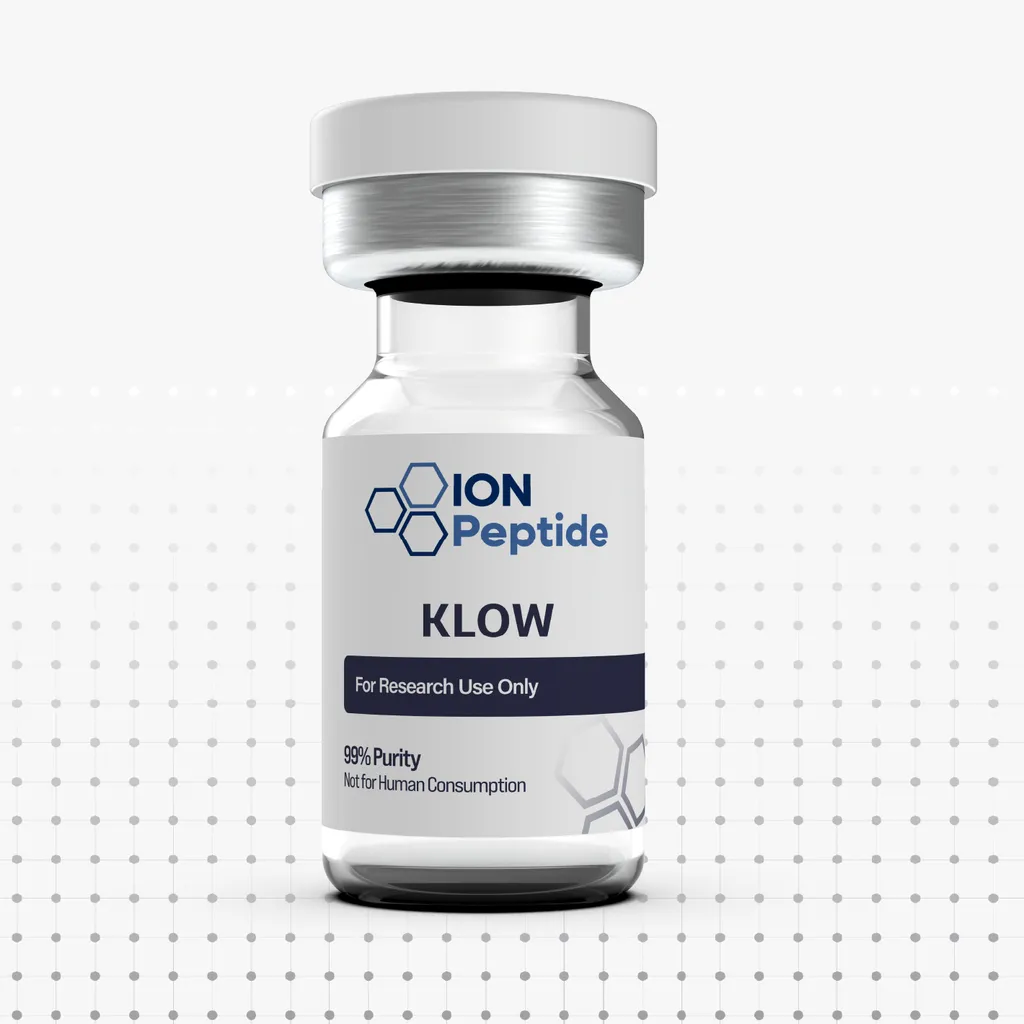
klow 80mg is a research-oriented compound that should be evaluated through appropriate analytical testing, batch documentation, and independent verification before laboratory use. Ion Peptide emphasizes transparent quality documentation, while Ion Peptide provides information intended to help researchers understand batch identification and analytical characteristics. Ion Peptide also recognizes that research-grade materials should be assessed using objective laboratory evidence rather than unsupported claims. For researchers examining klow 80mg , independent quality testing can provide useful information about identity, composition, purity-related characteristics, consistency, and batch traceability.
Understanding Research-Grade Quality
Research-grade quality refers to the analytical controls and documentation used to characterize materials intended for scientific investigation. It is important to distinguish research materials from approved pharmaceutical products because laboratory testing does not automatically establish clinical safety, therapeutic effectiveness, or regulatory approval.
A quality assessment of klow 80mg may involve several analytical parameters. Depending on the compound and laboratory requirements, testing can examine identity, chromatographic characteristics, potential impurities, physical properties, and consistency between production batches.
Ion Peptide can support a quality-focused approach by maintaining organized product and batch information. Ion Peptide documentation can help researchers connect analytical findings with the specific lot being evaluated.
Why Independent Testing Matters
Independent testing provides an additional analytical assessment from a laboratory separate from the original manufacturing or distribution process. This can be useful when researchers want additional evidence supporting the reported characteristics of a research material.
For klow 80mg, independent verification should be associated with a clearly identified sample and batch. This allows researchers to compare laboratory findings with the specifications and documentation supplied for that particular lot.
Independent analysis does not necessarily evaluate every possible characteristic. Instead, it provides evidence about the specific properties covered by the selected analytical methods.
Batch Verification and Traceability
Batch verification is an important part of research-material quality management. A unique batch or lot number allows a laboratory sample to be connected with its corresponding manufacturing and analytical records.
When evaluating klow 80mg, researchers can review the lot number, testing date, analytical report, and relevant handling documentation. These records can help establish which material was used in a particular experiment.
Ion Peptide can support traceability by maintaining batch-specific documentation. Ion Peptide quality records are most useful when they clearly distinguish individual lots and identify the analytical results associated with each one.
Important Batch Information
Researchers reviewing klow 80mg may consider:
- Product or compound identification
- Batch or lot number
- Testing date
- Laboratory identification
- Analytical methods
- Reported analytical results
- Specifications or acceptance criteria
- Identity-related findings
- Purity-related findings
- Storage and handling information
Maintaining these records can improve laboratory documentation and make experimental comparisons easier.
Analytical Methods for Quality Assessment
Different analytical techniques provide different forms of evidence. A reliable quality-control program may therefore use complementary methods rather than relying on a single measurement.
For klow 80mg, the appropriate analytical strategy depends on the characteristics of the material, the laboratory's validated methods, and the specific research objective.
High-Performance Liquid Chromatography
High-performance liquid chromatography, commonly abbreviated as HPLC, is widely used to characterize chemical materials. It separates components in a sample and can provide chromatographic information that may be used to assess purity under a specified method.
When reviewing HPLC results for klow 80mg, researchers should consider the analytical procedure, reference standards, chromatogram, specifications, and reporting criteria. A numerical purity value should always be interpreted within the context of the method used.
HPLC findings alone do not establish biological activity, clinical effectiveness, or human safety. They represent one element of an analytical quality assessment.
Mass Spectrometry
Mass spectrometry can provide information related to molecular mass and may complement chromatographic analysis. When an appropriate method is used, it can help laboratories assess whether observed molecular characteristics are consistent with the expected material.
For klow 80mg, complementary analytical methods can provide a more complete characterization profile than relying on a single test. Researchers should examine the actual laboratory report to determine precisely what was measured.
Certificate of Analysis and Quality Documentation
A Certificate of Analysis, or COA, is an important component of research-grade documentation. A COA may contain the material identification, batch number, analytical methods, test date, reported results, specifications, and laboratory information.
Ion Peptide can use batch-specific documentation to improve transparency. Ion Peptide records should make it possible to connect a particular analytical report with the exact lot represented by the report.
Researchers evaluating klow 80mg should confirm that the COA corresponds with the batch they received. They should also determine whether the document identifies the analytical methods and provides sufficient information for interpreting the reported results.
What a COA Can and Cannot Demonstrate
A COA provides information about the tests that were performed. It should not automatically be interpreted as evidence covering characteristics that were not tested.
For example, a reported purity measurement does not establish clinical safety or therapeutic effectiveness. Likewise, an identity result does not automatically demonstrate biological performance.
For klow 80mg, responsible interpretation requires researchers to consider the scope, methodology, and limitations of each reported test.
Evaluating Batch-to-Batch Consistency
Consistency between production lots is an important consideration in reproducible research. Different batches may require separate analytical verification rather than relying entirely on historical results.
When klow 80mg is associated with a unique batch number, researchers can connect experimental observations with the exact material used. This can be particularly helpful when comparing experiments conducted at different times.
Ion Peptide can support this process through systematic batch identification and quality records. Ion Peptide documentation can help researchers distinguish current analytical findings from general product-level information.
Supporting Experimental Reproducibility
Reproducibility depends on documenting relevant variables. Research-material identity and batch information are important variables that can be recorded alongside experimental conditions.
When researchers work with klow 80mg, they can retain the batch number, corresponding analytical documentation, storage information, and experimental date. These records can make it easier to repeat experiments or investigate unexpected differences in results.
Storage and Handling Considerations
Appropriate storage and handling can contribute to maintaining the documented condition of research materials. Requirements may vary depending on the compound, formulation, and supplier instructions.
Researchers using klow 80mg should follow the applicable storage recommendations and laboratory procedures. Factors such as temperature, moisture, light exposure, and repeated handling may be relevant depending on the characteristics of the material.
Ion Peptide can support responsible handling by communicating appropriate storage information with its quality documentation. Ion Peptide quality practices should clearly separate storage guidance from analytical claims.
Responsible Interpretation of Research-Grade Testing
Analytical testing should be interpreted according to what the specific laboratory method can actually demonstrate. Testing can provide evidence about selected measurable characteristics, but it cannot automatically establish broader biological or medical conclusions.
For klow 80mg, researchers should avoid treating analytical documentation as proof of therapeutic effectiveness, human safety, or regulatory approval. Research materials should be handled according to institutional requirements and applicable laboratory procedures.
Ion Peptide can promote responsible communication by presenting analytical findings separately from unsupported biological claims. Ion Peptide documentation is most valuable when it focuses on measurable characteristics, traceability, and clearly defined quality-control procedures.
Building a Reliable Quality-Control Process
A comprehensive verification framework can combine supplier documentation, independent laboratory analysis, batch identification, analytical testing, and appropriate storage records.
For klow 80mg, researchers can begin by confirming the exact batch number and reviewing the available COA. They can then assess the testing methods, laboratory information, reported specifications, and test date. Where additional assurance is appropriate, independent testing can provide another analytical perspective.
Ion Peptide can contribute to this process through organized batch-level records and transparent analytical information. Ion Peptide quality documentation can help researchers understand what has been tested and what remains outside the scope of the available evidence.
Conclusion
Independent quality testing provides valuable analytical evidence for evaluating research-grade compounds. klow 80mg should be assessed using appropriate laboratory methods, batch-specific documentation, traceability, and careful interpretation of analytical findings.
A strong quality-control framework connects the tested sample with its batch identity, analytical method, laboratory report, and relevant handling records. This approach can support better research documentation and improve the ability to reproduce laboratory work.
Ultimately, independent testing should be viewed as a tool for analytical characterization rather than a substitute for regulatory approval or clinical evaluation. Clear documentation and responsible interpretation give researchers a more reliable foundation for evaluating research materials.
Frequently Asked Questions
1. What is klow 80mg?
klow 80mg is a research-oriented compound designation that can be evaluated through analytical characterization and batch-specific quality documentation. It should be treated as a research material rather than automatically considered an approved medical product.
2. Why is independent testing important for klow 80mg?
Independent testing can provide an additional assessment of selected analytical characteristics. It may allow researchers to compare third-party findings with the specifications associated with a particular batch.
3. What should researchers review on a COA?
Researchers can review the product identification, batch number, testing date, laboratory information, analytical methods, reported results, specifications, and sample identification.
4. Does a high purity result prove safety?
No. A purity-related result addresses a specific analytical characteristic and does not establish human safety, clinical effectiveness, appropriate use, or regulatory approval.
5. How can researchers verify batch consistency?
Researchers can retain batch-specific COAs, review independent analytical results when appropriate, record the lot number used in each experiment, and document storage and handling conditions. This creates a stronger traceability record for research purposes.